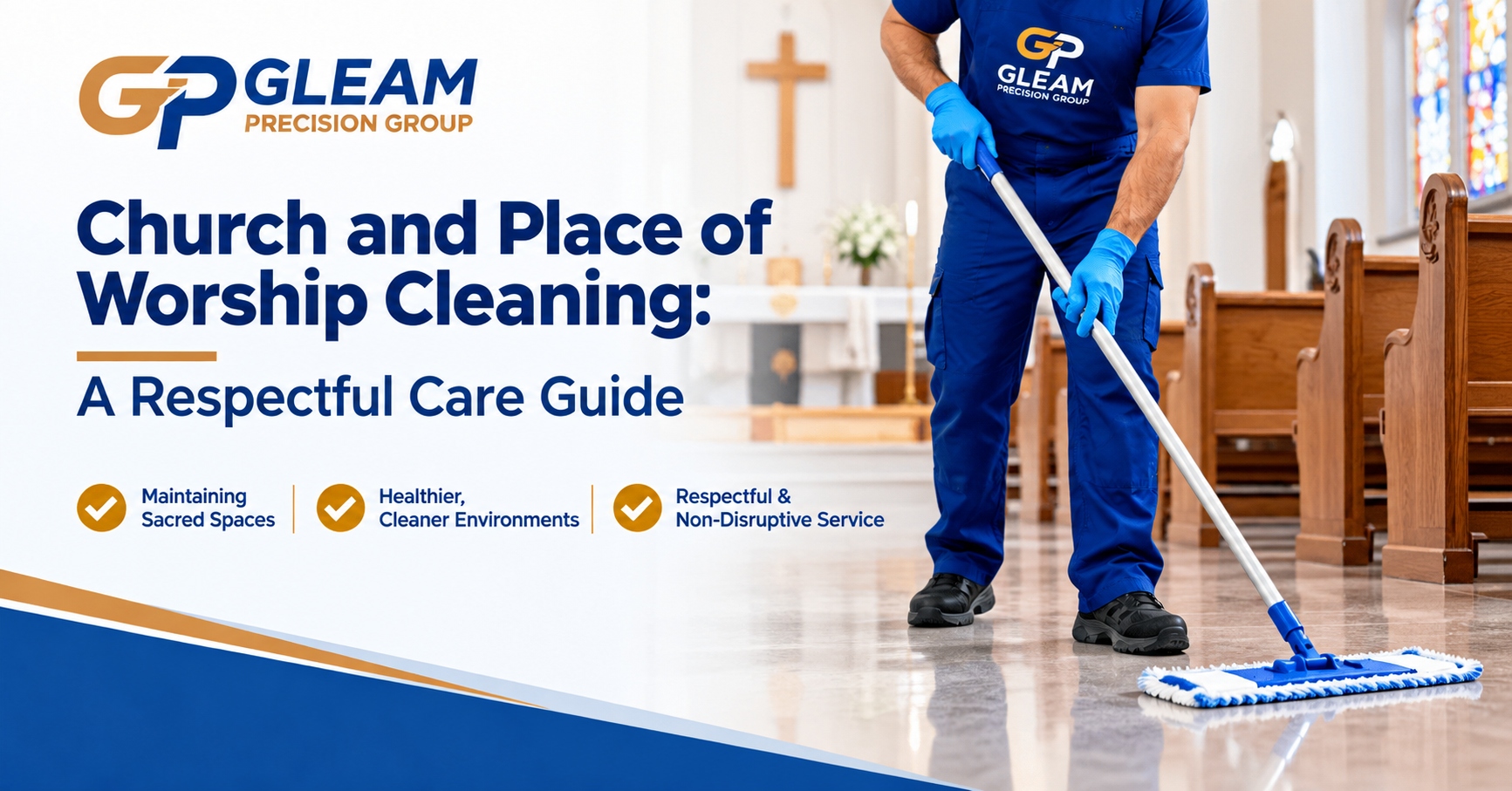
Places of worship hold a special place in their communities. Churches, mosques, temples, synagogues, and other religious facilities provide spaces for prayer, reflection, ceremonies, education, and community gatherings. Keeping these environments clean requires more than routine maintenance. It calls for consistency, attention to detail, and respect for religious traditions.
Church and place of worship cleaning involves maintaining hygienic, welcoming, and orderly spaces while protecting sacred furnishings, religious objects, and the dignity of the people who use them. From sanctuary floors and seating to washrooms, kitchens, classrooms, and community halls, each area requires an appropriate cleaning approach.
For religious organizations in Ontario and across Canada, a well-planned cleaning programme can help maintain a positive visitor experience, support hygiene, protect building materials, and prepare facilities for regular services and special events.
This guide explains how to clean places of worship respectfully, which areas need attention, how often cleaning should take place, and what to look for when hiring a professional cleaning company.
Church and place of worship cleaning is the routine and periodic cleaning of religious buildings and their associated facilities. It includes worship areas, entrances, corridors, washrooms, offices, kitchens, classrooms, and spaces used for community activities.
Unlike standard office cleaning, religious facility cleaning must account for worship schedules, sacred objects, ceremonial arrangements, cultural practices, and the needs of diverse congregations.
A typical cleaning programme may include:
The exact cleaning plan should reflect the facility's size, usage, surface materials, and religious requirements. The objective is to maintain cleanliness without disturbing worship, mishandling sacred items, or interfering with established practices.
Also Read:
Medical and Dental Office Cleaning Standards in Ontario
Religious facilities often welcome people of different ages and backgrounds. They may also host weddings, funerals, holiday celebrations, religious education, community meals, and charitable activities.
A respectful cleaning programme supports these activities in several ways.
Clean entrances, tidy seating, well-maintained floors, and fresh washrooms help congregants and visitors feel comfortable. First impressions can influence how people experience a facility, especially when they are attending for the first time.
Door handles, seating, washroom fixtures, tables, and other frequently touched surfaces can accumulate dirt and microorganisms. Routine cleaning removes soil, while appropriate disinfection helps address contamination risks where necessary.
The cleaning schedule should reflect actual building use, with additional attention given to busy areas and shared facilities.
Places of worship may contain polished wood, natural stone, delicate textiles, religious artwork, ceremonial objects, and valuable decorative features. Incorrect cleaning products or abrasive tools can damage these materials.
A careful approach identifies sensitive surfaces, establishes approved cleaning methods, and ensures that staff know which items require special handling.
Some areas may have restrictions concerning access, footwear, movement, or the handling of objects. These expectations differ between religious traditions and individual facilities.
Cleaning teams should receive clear instructions from an authorized representative before entering restricted areas or touching ceremonial furnishings.
An effective religious facility cleaning plan divides the building into zones so that every area receives suitable attention.
The main worship area should remain clean, orderly, and ready for services. Cleaning tasks may include vacuuming carpets, sweeping or mopping appropriate floors, dusting approved furniture, and removing visible debris from seating areas.
Frequently touched surfaces, such as door handles and chair arms, should be cleaned according to the facility's schedule.
Altars, pulpits, prayer rugs, ceremonial objects, and other sacred items must not be moved or cleaned without permission. Where specialized care is needed, consult the person responsible for the facility or the relevant preservation professional.
Entrances receive dirt, dust, moisture, and debris from shoes and outdoor conditions. Regular maintenance may include cleaning entrance mats, vacuuming, sweeping, mopping, and wiping approved glass and touchpoints.
During rainy or snowy weather, inspect floors more frequently to identify moisture and reduce slipping hazards. Use suitable warning signs and follow safe floor-cleaning procedures.
Keep corridors and access routes free of cleaning equipment, waste bags, and other obstructions, especially when older adults, children, or people with mobility needs use the building.
Clean washrooms are essential for facilities that welcome large congregations or host public events. Toilets, sinks, taps, mirrors, dispensers, door handles, and floors should be cleaned on an appropriate schedule.
Replenish soap, toilet paper, and other necessary supplies. Clean washroom equipment should be managed separately from tools used in kitchens or worship areas to reduce cross-contamination.
High-traffic facilities may need washroom inspections throughout services or events rather than a single cleaning at the beginning of the day.
Many religious buildings serve meals, organize fundraising events, and host community gatherings. These activities make kitchen and dining-area hygiene particularly important.
Clean tables, counters, sinks, and floors using suitable methods. Food-contact surfaces should be cleaned and sanitized as required by applicable food safety procedures and product instructions.
Equipment used for food preparation must be handled according to manufacturer directions and the facility's food safety plan. Cleaning personnel should only undertake tasks for which they are trained and authorized.
Community halls may require additional cleaning after weddings, funerals, celebrations, meetings, and shared meals.
Religious education rooms, nurseries, and children's activity spaces often contain shared tables, chairs, toys, books, and learning materials.
Clean frequently touched surfaces and use appropriate cleaning or disinfection methods based on the item and its intended use. Products must be suitable for the materials being treated.
Store chemicals securely away from children, and follow the facility's procedures for cleaning shared toys and educational equipment.
Office areas may require dusting, floor care, waste removal, and cleaning of approved touchpoints while protecting confidential documents and personal belongings.
The appropriate frequency depends on the building's size, attendance, event schedule, and the types of activities taking place. A small church used weekly will have different requirements from a large religious centre that operates daily.
A practical schedule may include:
These are planning examples, not universal legal requirements. Facilities should adjust the schedule according to occupancy, observed conditions, hygiene needs, and the manufacturer's recommendations for relevant surfaces and equipment.
Also Read:
Post-Construction Cleaning Checklist for Contractors in Ontario
Respectful cleaning begins with communication. A cleaning team needs to understand the building's religious practices, access restrictions, and expectations before starting work.
Speak with the facility manager or designated religious representative before preparing the cleaning plan. Confirm which areas are restricted, whether footwear rules apply, and which objects must remain untouched.
Document these instructions so that all assigned cleaners follow the same procedures, including replacement staff.
Different materials respond differently to water, chemicals, and abrasive tools. Natural stone, polished wood, upholstery, painted surfaces, and delicate textiles may require different products and techniques.
Follow manufacturer instructions, check product compatibility, and test an inconspicuous area when appropriate. Never mix cleaning chemicals, and ensure that workers understand applicable product labels, ventilation needs, and protective equipment requirements.
Religious books, artwork, ceremonial objects, offerings, prayer materials, and personal belongings should not be handled casually.
Obtain permission before moving an item. If an object is fragile, valuable, or culturally significant, ask the responsible representative to determine the appropriate care method.
Cleaning should support the congregation's activities rather than disrupt them. Schedule noisy equipment use and floor maintenance outside prayer times, ceremonies, and services whenever possible.
For busy facilities, coordinate cleaning around the event calendar and establish a process for requesting additional service when schedules change.
Professional church cleaning services can help religious organizations maintain consistent cleanliness while reducing the burden on staff and volunteers.
Before hiring a provider, consider the following factors.
Experience with religious facilities: Ask whether the company understands sacred-space etiquette, access restrictions, and the need to protect delicate furnishings.
Customized cleaning plans: The provider should create a schedule that reflects the building's size, traffic, flooring, facilities, and event calendar.
Staff training: Confirm that workers understand appropriate cleaning methods, chemical safety, equipment use, and incident reporting.
Respect for privacy and property: Cleaners should follow access rules, avoid unnecessary handling of personal belongings, and report damage or unexpected issues.
Flexible scheduling: Early-morning, evening, or event-based services can help minimize disruption to worship and community activities.
Clear communication: A dependable provider should make it easy to request additional cleaning, report concerns, and adjust schedules.
Transparent service scope: Confirm which tasks are included, how often they are performed, whether supplies are provided, and whether specialized floor care or other services cost extra.
When comparing providers, consider service consistency, staff professionalism, suitable cleaning methods, and accountability—not price alone.
For organizations seeking professional support, Gleam Precision Group can be a starting point for exploring cleaning service options and determining whether a provider's offerings suit the facility's needs.
Also Read:
The Art of Efficient Home Cleaning: A Comprehensive Guide
Church cleaning may include sanctuary and seating care, floor cleaning, entrance maintenance, washroom cleaning, kitchen and community hall maintenance, waste removal, and preparation for services or special events. The exact scope depends on the facility.
Frequency depends on attendance, building size, and how often the facility hosts services and events. Some buildings need weekly service, while heavily used facilities may require daily cleaning and additional event support.
Only when they have permission and clear instructions. Some items require specialized care or must remain untouched. Always confirm handling rules with the facility's designated representative.
Regular cleaning addresses routine tasks such as floors, washrooms, waste, and frequently touched surfaces. Deep cleaning involves more intensive or less frequent work, such as detailed floor care and cleaning selected furnishings and accessible fixtures.
Prepare the building before the event, monitor washrooms and high-touch areas where appropriate, remove waste promptly, and arrange post-event cleaning. Address spills and potential safety hazards as soon as possible.
A professional provider can offer a structured schedule, trained personnel, suitable products, and clear responsibilities. This helps religious organizations maintain their facilities while allowing volunteers and staff to focus on community activities.
A clean place of worship supports community well-being, creates a welcoming atmosphere, and helps preserve the dignity of spaces used for prayer, reflection, and fellowship.
Effective church and place of worship cleaning combines consistent routines, suitable products, careful treatment of furnishings, and respect for religious traditions. From sanctuaries and prayer rooms to washrooms, kitchens, and community halls, every area benefits from a cleaning plan tailored to its purpose.
By establishing clear expectations and choosing an appropriate cleaning partner, religious organizations can maintain cleaner, safer, and more welcoming facilities for congregants and visitors throughout the year.