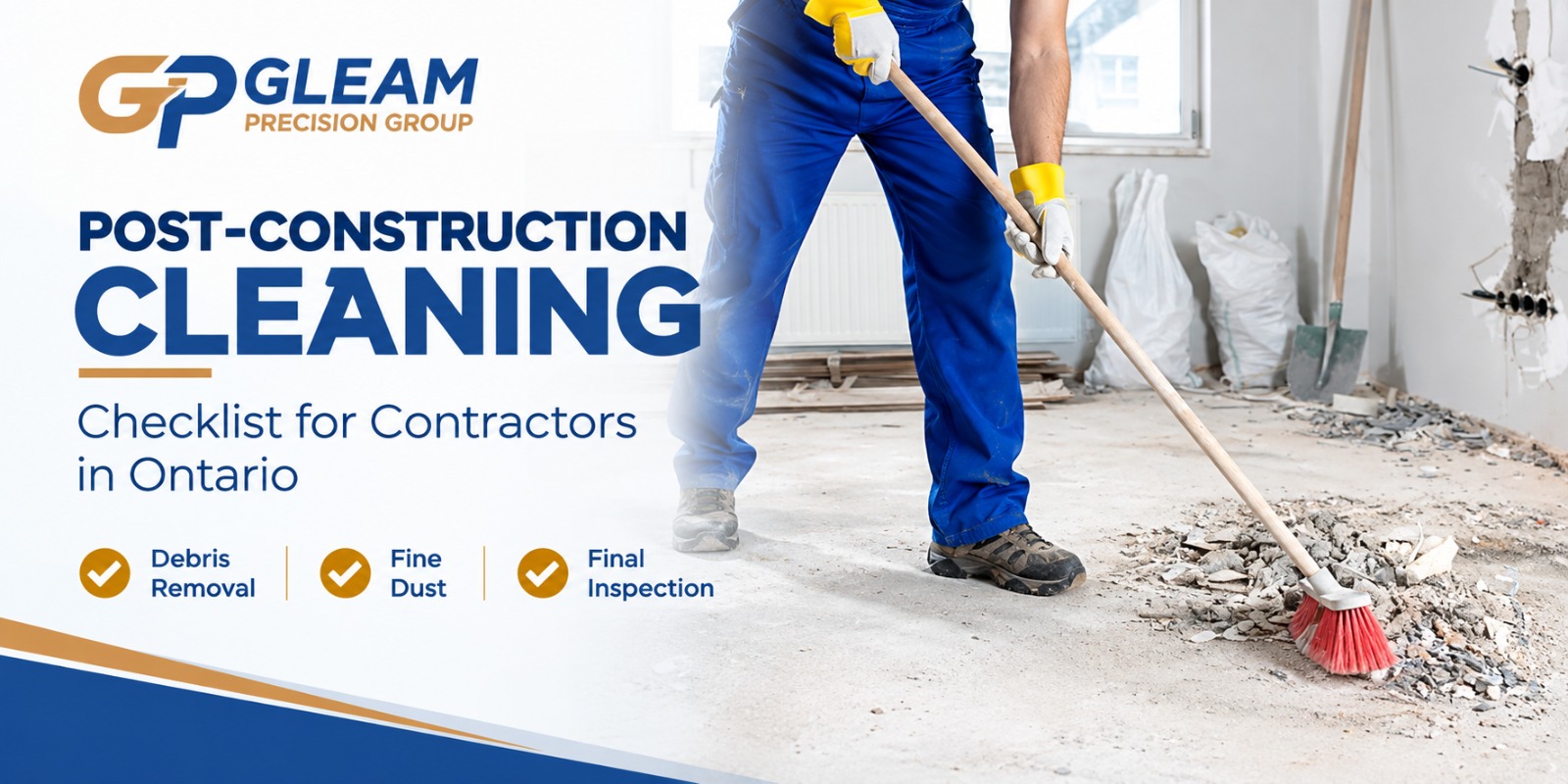
Completing a construction or renovation project involves more than finishing the building work. Before a property is ready for inspection, occupancy, or client handover, it needs a thorough post-construction cleaning process.
Construction sites often leave behind fine dust, drywall residue, paint marks, adhesive, packaging, and other debris. If these materials are not removed properly, they can affect the appearance of the property and delay the final handover.
A well-organized post-construction cleaning checklist for contractors in Ontario helps construction teams prepare residential and commercial properties for their next stage of use. It also makes it easier to identify missed areas, coordinate trades, and maintain clear expectations during the final inspection.
Whether you manage a residential renovation, commercial development, office fit-out, or newly constructed property, this guide explains the essential cleaning tasks, safety considerations, and handover procedures to follow.
Also Read:
Medical and Dental Office Cleaning Standards in Ontario
Post-construction cleaning is the process of removing dust, debris, residue, and construction-related dirt after building, renovation, or installation work has been completed.
Unlike routine maintenance, this type of cleaning focuses on the fine dust and surface residue that can remain on floors, windows, cabinets, fixtures, walls, and other finished surfaces.
The process generally includes three stages:
The exact scope depends on the property's condition, installed materials, project requirements, and handover deadline.
For properties that require professional preparation before occupancy, explore post-construction cleaning services from Gleam Precision Group.
Use this room-by-room checklist to organize the final cleanup and prepare the property for inspection.
Begin by removing loose materials that could interfere with detailed cleaning or create safety hazards.
Check the following areas:
Separate reusable materials where appropriate. Hazardous or regulated waste should be handled according to the relevant requirements rather than mixed with ordinary construction debris.
Fine construction dust can settle on surfaces throughout a property, even after visible debris has been removed. It may also resettle after the initial cleaning if additional construction work takes place.
Pay particular attention to:
Use suitable vacuum equipment and appropriate filtration, including HEPA-filtered equipment where required or appropriate. Avoid dry sweeping or compressed-air methods that may disperse dust into the air.
If asbestos, lead, silica hazards, or other potentially hazardous materials are suspected, stop the affected cleaning activity and arrange appropriate assessment and controls. Ordinary cleaning is not a substitute for specialized remediation.
Flooring requires different cleaning methods depending on its material and finish. Using the wrong chemical or excessive moisture can cause permanent damage.
Hardwood and engineered wood
Tile and grout
Vinyl and luxury vinyl plank
Carpet
Inspect finished floors under good lighting to identify streaks, residue, scratches, or missed areas.
Clean windows and glass surfaces carefully to remove dust, fingerprints, and compatible construction residue.
Include:
Before scraping glass, confirm that the glass type, coating, and manufacturer instructions permit the method. Improper scraping can damage tempered glass and specialty coatings.
For high-level or difficult-to-access windows, use appropriately qualified personnel and safe access equipment. Professional commercial cleaning services may be relevant when a project includes extensive glass and other commercial cleaning requirements.
Construction dust can collect inside cabinets, drawers, and around newly installed appliances. These areas should be checked before the property is handed over.
Complete the following tasks:
Always select cleaning products compatible with stone, laminate, stainless steel, and other installed materials. Never mix incompatible cleaning chemicals.
Washrooms should be free from visible construction dust and ready for use before the final handover.
Clean and inspect:
Follow disinfectant labels and required contact times when disinfection is part of the cleaning scope.
If a fixture is damaged, leaking, or improperly installed, document the issue and notify the contractor rather than treating it as a cleaning problem.
Finished surfaces can retain fingerprints, dust, and marks after the main cleaning has been completed.
Inspect:
Use gentle, material-appropriate methods to avoid damaging paint or finishes. Electrical panels and internal electrical equipment should only be handled by appropriately authorized and qualified personnel.
Construction dust can accumulate around ventilation openings and accessible HVAC components.
Your checklist should include:
Routine post-construction cleaning does not automatically include internal duct cleaning, mechanical equipment cleaning, or HVAC commissioning. These tasks should be coordinated separately when needed.
Shared spaces are sometimes overlooked when cleaning focuses on individual rooms.
Check:
Keep walkways clear of debris, trip hazards, and wet-floor hazards throughout the process.
Final cleaning should take place after dust-producing construction and installation activities have substantially finished.
Use this final checklist:
If additional trades return after cleaning, schedule touch-ups where needed. Drilling, sanding, painting, and installation work can quickly make previously cleaned surfaces dirty again.
Also Read:
Simple Ways to Keep Your Living Space Tidy and Clean
Contractors should identify relevant workplace hazards before cleaning begins. The applicable safety requirements depend on the project, the work being performed, and the people involved.
Ontario's Occupational Health and Safety Act and applicable regulations may establish requirements for construction-site cleaning activities.
Before work begins:
Contractors should confirm the requirements applicable to their specific project rather than assuming one checklist covers every situation.
Depending on the task and identified hazards, workers may require gloves, eye protection, protective footwear, suitable respiratory protection, or other personal protective equipment.
Follow product labels and applicable workplace requirements when using cleaning chemicals. Where WHMIS applies, ensure relevant training, labels, and safety data sheet requirements are addressed.
Never mix incompatible chemicals, particularly bleach-containing products with ammonia or acids.
Construction dust may contain hazardous substances, depending on the materials and activities involved.
If asbestos, lead, silica hazards, or other regulated substances are suspected, stop the affected cleaning activity and arrange an appropriate assessment. Specialized controls or remediation may be necessary before general cleaning can safely continue.
A successful handover depends on more than a clean appearance. Clear communication, scheduling, and documented inspections can help contractors avoid unnecessary rework.
Before arranging cleaning, confirm:
Written expectations help the contractor, cleaning team, and other trades understand their responsibilities.
Schedule detailed cleaning after major dust-producing work has substantially finished. Coordinate with painters, flooring installers, electricians, plumbers, and other trades to reduce the risk of rework.
For projects requiring multiple stages, arrange rough cleaning first, detailed cleaning next, and a final touch-up before the client walkthrough.
For ongoing cleaning after the handover, businesses can also review janitorial services from Gleam Precision Group. These services are designed for routine facility upkeep rather than replacing a project-specific post-construction cleanup.
Use a room-by-room inspection sheet to record completed tasks and outstanding issues.
Photographs can help document pre-existing damage, areas requiring further work, and issues outside the cleaning team's responsibilities.
Cleaning teams should report defects rather than conceal them. The contractor can then assign repairs to the appropriate trade before final acceptance.
Professional post-construction cleaning can be helpful when a project involves extensive fine dust, delicate finishes, large glass areas, multiple washrooms, or a demanding handover deadline.
A professional team can help organize cleaning tasks, use suitable equipment, and inspect details that might be missed during a general site cleanup.
Professional support may be particularly useful for:
When evaluating a provider, ask about relevant project experience, the agreed scope, safety procedures, equipment, insurance, and the final inspection process.
Gleam Precision Group lists post-construction cleaning among its services and provides commercial cleaning solutions for businesses across Ontario. Visit the Gleam Precision Group website to review available services and contact the company to confirm your project's requirements and service availability.
Post-construction cleaning commonly includes debris removal, fine dust removal, floor cleaning, window and glass cleaning, cabinet and countertop cleaning, washroom cleaning, and final detailing. The exact scope depends on the property and the service agreement.
The time required depends on the property's size, condition, amount of dust, number of fixtures, accessibility, and number of cleaning stages. A site assessment provides a more reliable estimate.
Detailed cleaning should generally take place after major construction and dust-producing work is substantially complete. A final touch-up may be necessary after inspections, repairs, or additional installations.
There is no single universal cleaning checklist that applies identically to every project. Contractors must meet applicable health and safety, waste management, building, and contractual requirements. The required cleaning scope depends on the project and its specific circumstances.
Rough cleaning focuses on removing larger debris and loose construction waste. Final cleaning focuses on fine dust, glass, floors, fixtures, fingerprints, and presentation before inspection or handover. Some projects also require a separate detailed cleaning stage.
Pricing depends on the property's size, condition, amount of construction residue, cleaning scope, access requirements, and specialist needs. Contractors should request a project-specific quotation rather than rely on one price per square foot for every property.
Yes. After the initial construction cleanup and handover, a property may benefit from a recurring maintenance plan. Gleam Precision Group's janitorial services are relevant for businesses that need ongoing facility cleaning and upkeep.
A detailed post-construction cleaning checklist helps Ontario contractors prepare residential and commercial properties for inspection, occupancy, and client handover.
From construction debris and fine dust to windows, floors, washrooms, and final detailing, each stage contributes to a cleaner and more professional result. Coordinating cleaning with construction schedules, following appropriate safety procedures, documenting deficiencies, and completing a final inspection can help reduce avoidable rework.
If you are preparing a newly built or renovated commercial property for handover, visit Gleam Precision Group to explore its cleaning services and confirm whether the required post-construction cleaning support is available for your project.