226 924 4351
438 778-1257
info@gleamprecisiongroup.com
Open: 24/7
Find Us

Warehouse Cleaning Checklist: Floors, Washrooms, Breakrooms and High-Traffic Areas

A clean warehouse is essential for maintaining an organized workplace, protecting equipment, supporting employee comfort, and keeping daily operations running smoothly. Warehouses experience constant movement from employees, forklifts, pallet jacks, delivery vehicles, and inventory handling. Without a consistent cleaning routine, dust, packaging debris, spills, and waste can accumulate quickly across floors, washrooms, breakrooms, loading areas, […]
October 19, 2026
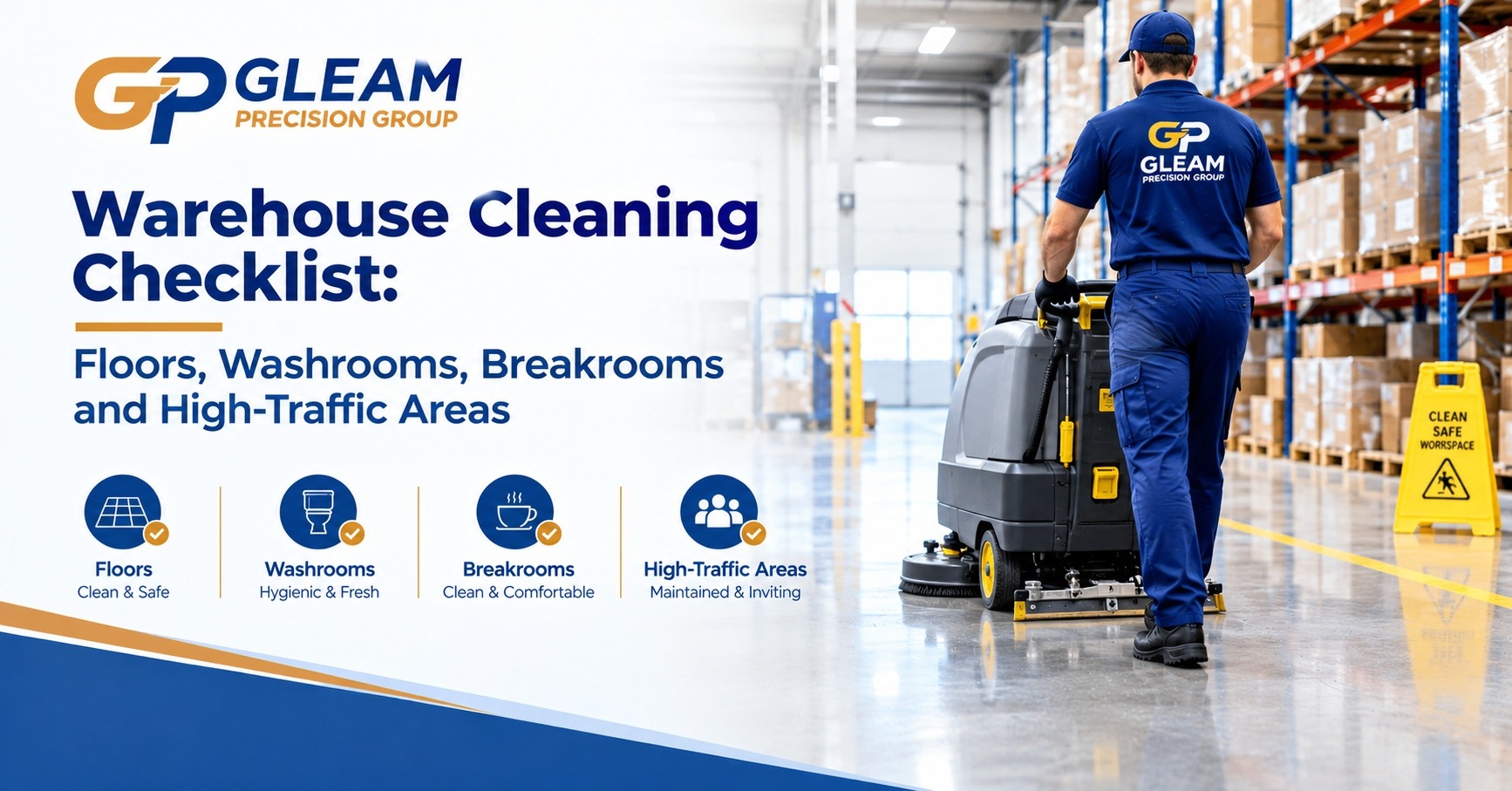
Warehouse cleaning checklist covering clean industrial floors, washrooms, breakrooms and high-traffic work areas

A clean warehouse is essential for maintaining an organized workplace, protecting equipment, supporting employee comfort, and keeping daily operations running smoothly. Warehouses experience constant movement from employees, forklifts, pallet jacks, delivery vehicles, and inventory handling. Without a consistent cleaning routine, dust, packaging debris, spills, and waste can accumulate quickly across floors, washrooms, breakrooms, loading areas, and other shared spaces.

A practical warehouse cleaning checklist helps facility managers identify cleaning priorities, assign responsibilities, and maintain consistent standards. Instead of relying on occasional cleanup, businesses can use a structured schedule that covers daily tasks, weekly maintenance, and periodic deep cleaning.

Businesses exploring professional support can learn more about Gleam Precision Group and its cleaning services. Whether your facility needs routine janitorial support or more intensive floor maintenance, the right cleaning plan should reflect your warehouse layout, traffic levels, work activities, and site-specific safety requirements.

Why Is a Warehouse Cleaning Checklist Important?

Warehouses are busy environments where even small housekeeping problems can affect daily operations. Dust can collect on accessible surfaces, waste can obstruct walkways, and spills can create slippery conditions. Poorly maintained washrooms and breakrooms can also reduce employee comfort and make shared facilities less pleasant to use.

A checklist helps businesses address these issues systematically. It establishes which areas need attention, how often tasks should be completed, and who is responsible for checking the results.

Key benefits include:

  • Better housekeeping: Routine cleaning helps keep floors, workstations, and shared spaces organized.
  • Reduced slip and trip hazards: Prompt attention to spills, debris, and obstructed walkways supports workplace safety.
  • Cleaner employee facilities: Regular washroom and breakroom maintenance improves the experience of people using the building.
  • More consistent results: Written tasks help prevent important areas from being overlooked.
  • Improved facility presentation: A maintained warehouse creates a more professional impression for employees, suppliers, clients, and visitors.
  • Easier maintenance planning: A schedule helps facility managers identify recurring cleaning needs and arrange periodic services.

Cleaning alone does not replace warehouse safety procedures, equipment inspections, or hazard controls. It should form part of a broader housekeeping and workplace safety program.

Also Read:
How to Choose a Commercial Cleaning Company in Cambridge, Ontario

1. Warehouse Floor Cleaning Checklist

Warehouse floors often require the most frequent attention because they receive constant foot traffic, equipment movement, packaging debris, and occasional spills. The correct cleaning method depends on the floor material, the type of contamination, and the activities taking place in the facility.

For suitable sites, professional floor cleaning services can help businesses plan appropriate maintenance for commercial and industrial floor surfaces.

Daily floor cleaning tasks

Use this checklist during each operating day:

  • Remove loose packaging, paper, and other debris from designated floor areas.
  • Check aisles, walkways, and exits for obstructions.
  • Inspect floors for spills, leaks, or visible contamination.
  • Address spills promptly using the site's approved procedures.
  • Keep pedestrian routes and designated equipment paths clear.
  • Clean accessible entrances and other areas where dirt accumulates.
  • Confirm that wet-floor signs or barriers are used when necessary.
  • Report damaged flooring, persistent stains, or recurring spill sources.

Weekly floor cleaning tasks

Weekly tasks may include more detailed cleaning of areas that receive less frequent attention:

  • Clean floor edges and accessible corners.
  • Remove accumulated dust and debris from suitable floor surfaces.
  • Inspect areas beneath accessible workstations or storage fixtures.
  • Review recurring stains and determine whether a different cleaning method is needed.
  • Check whether floor-cleaning equipment is functioning correctly.
  • Review recurring housekeeping issues with the facility team.

Important floor safety considerations

Do not use a cleaning product or machine without confirming that it is suitable for the floor surface and the working environment. Excess water, unsuitable chemicals, or incorrect equipment can damage some surfaces or create additional hazards.

Cleaning activities should also be coordinated with warehouse operations. Where forklifts or other moving equipment operate, follow site traffic controls and isolate the cleaning area as required. Employees should never be expected to clean an active spill without the appropriate training, protective equipment, and procedures.

2. Washroom Cleaning Checklist

Warehouse washrooms are shared facilities that need consistent cleaning, inspection, and replenishment. High usage can quickly lead to empty dispensers, overflowing bins, dirty fixtures, and unpleasant odours.

A washroom checklist should cover both visible cleanliness and the availability of essential supplies.

Daily washroom cleaning tasks

  • Clean and disinfect toilets and urinals using suitable products.
  • Clean sinks, taps, and frequently touched fixtures.
  • Wipe mirrors and accessible surfaces.
  • Clean washroom floors using an appropriate method.
  • Empty waste bins and replace liners when required.
  • Replenish soap, toilet paper, and paper towels as needed.
  • Check dispensers and report damaged fixtures.
  • Inspect for leaks, blocked drains, or unusual odours.
  • Confirm that the area is left clean and safe to use.

Washroom maintenance beyond daily cleaning

Depending on use, some tasks may require more frequent attention or periodic maintenance. These can include cleaning less accessible surfaces, checking ventilation, addressing persistent odours, and reporting plumbing issues.

Cleaning staff should follow product instructions and avoid mixing chemicals. Appropriate protective equipment, hand hygiene, and safe storage practices are important when handling cleaning and disinfecting products.

For facilities with specific hygiene requirements, establish written procedures that reflect the type of workplace and applicable regulations.

3. Breakroom and Kitchen Cleaning Checklist

Breakrooms are used throughout the day for meals, refreshments, and rest periods. Food residue, spills, shared appliances, and waste can make these spaces difficult to maintain without a clear routine.

Because breakrooms are used by multiple employees, cleaning should address both surfaces and common touchpoints.

Daily breakroom cleaning tasks

  • Wipe tables and countertops with appropriate cleaning products.
  • Clean visible food spills promptly.
  • Clean frequently touched handles and shared surfaces.
  • Wipe the exterior of shared appliances as appropriate.
  • Clean sinks and taps.
  • Empty waste and recycling bins according to site procedures.
  • Sweep or vacuum floors and mop suitable hard surfaces.
  • Check for unpleasant odours and obvious sources of contamination.
  • Restock agreed supplies where this is part of the cleaning contract.

Weekly breakroom cleaning tasks

  • Clean accessible cupboard and shelf exteriors.
  • Clean appliance interiors when appropriate and safe to do so.
  • Move approved movable items to clean beneath and behind them.
  • Inspect corners and less frequently used surfaces for accumulated dirt.
  • Review waste disposal and recycling arrangements.
  • Report damaged appliances, leaks, or persistent maintenance concerns.

Employees should be given clear instructions for storing food and removing personal items. Cleaning staff should not discard belongings or food without following the workplace's established procedures.

It is also useful to distinguish between cleaning tasks assigned to professional cleaners and responsibilities assigned to employees. This prevents assumptions about who must clean shared appliances, remove personal food, or manage everyday waste.

Also Read:
Gym and Fitness Centre Cleaning: A Daily, Weekly and Monthly Schedule

4. High-Traffic Areas and Shared Spaces

High-traffic areas include entrances, corridors, pedestrian walkways, shared workstations, reception areas, and designated routes between warehouse zones. These spaces collect dirt quickly because people and equipment pass through them repeatedly.

A cleaning schedule should identify the areas that become dirty fastest and assign appropriate inspection frequencies.

High-traffic area checklist

  • Inspect entrances for tracked-in dirt, moisture, and debris.
  • Remove loose dirt from accessible walkways.
  • Keep corridors and emergency exits free from cleaning equipment and waste.
  • Clean shared touchpoints according to the site's cleaning plan.
  • Check door handles and other frequently handled surfaces.
  • Empty bins before they overflow.
  • Clean visible marks from appropriate surfaces.
  • Report damaged floor finishes or recurring contamination.
  • Recheck areas where spills or debris commonly accumulate.

Some warehouse environments also have visitor areas, administrative offices, and meeting rooms. These spaces may require a different cleaning frequency from the operational floor. For facilities with office areas, office cleaning services may be relevant to the separate needs of administrative spaces.

The goal is to establish a realistic routine based on actual use rather than applying the same schedule to every part of the building.

5. Warehouse Equipment, Storage Areas, and Accessible Surfaces

Warehouse cleaning also involves accessible surfaces around workstations, storage zones, and shared equipment areas. Dust and debris can collect around packing stations, shelving, waste collection points, and frequently used work surfaces.

Cleaning plans should identify which surfaces can be cleaned safely and which require specialist procedures or authorization.

Routine housekeeping tasks

  • Remove waste from designated collection points.
  • Clean accessible work surfaces according to site procedures.
  • Remove dust from suitable, reachable surfaces.
  • Keep cleaning tools stored in designated locations.
  • Check that supplies are labelled and stored appropriately.
  • Report leaks, pest evidence, damaged containers, or unusual contamination.
  • Keep fire equipment, electrical panels, and emergency access points unobstructed.

Cleaning staff should not climb shelving, enter restricted areas, move heavy inventory, or clean machinery unless they are authorized and trained to do so. Equipment must be handled according to site-specific procedures, including any required isolation or lockout arrangements.

Do not treat elevated structures, industrial machinery, or hazardous-material areas as ordinary cleaning tasks. These may require qualified personnel, specialized equipment, and additional risk controls.

6. Weekly and Monthly Warehouse Deep Cleaning Tasks

Daily cleaning keeps the facility usable, but some tasks require more time or specialized equipment. A periodic cleaning schedule can address areas that are not fully covered during routine visits.

The appropriate frequency depends on the warehouse's size, activity level, floor type, contamination, and operating schedule.

Weekly tasks

  • Clean accessible corners and edges that are missed during routine work.
  • Inspect less frequently used shared areas.
  • Clean accessible surfaces around designated packing or staging zones.
  • Review waste collection points and recycling areas.
  • Check cleaning tools and equipment for wear or damage.
  • Review recurring cleaning complaints and missed tasks.

Monthly or periodic tasks

  • Schedule deeper floor cleaning where appropriate.
  • Clean accessible high-level surfaces only where safe access procedures are in place.
  • Review the condition of entrances, shared areas, and floor finishes.
  • Assess whether cleaning frequency should change in heavily used zones.
  • Review cleaning products, supplies, and storage arrangements.
  • Update the checklist after layout changes or operational changes.

Some facilities may need deep cleaning more frequently, while others may schedule it quarterly or around planned shutdowns. A documented inspection can help determine which schedule is appropriate.

For more intensive cleaning requirements, businesses can review deep cleaning services and confirm which tasks are suitable for their warehouse environment.

7. Create a Practical Warehouse Cleaning Schedule

A checklist is most effective when it is assigned to specific people and linked to a realistic schedule. A simple plan can divide responsibilities among warehouse staff, supervisors, and professional cleaners.

FrequencyMain cleaning priorities
DailySpills and debris, floors, washrooms, breakrooms, waste, high-traffic areas
WeeklyDetailed attention to corners, accessible surfaces, shared areas, and cleaning equipment
Monthly or periodicPlanned deep cleaning, floor maintenance review, less frequently cleaned surfaces, schedule review

This is a starting point, not a universal rule. High-traffic warehouses may need several inspections throughout the day, while specialized facilities may require more frequent cleaning in certain areas.

Each task should identify the responsible person, completion time, and any required follow-up. Supervisors can use a simple sign-off sheet or digital checklist to confirm completion and record problems.

The checklist should also include an escalation process. If an employee identifies a spill, damaged flooring, pest evidence, or another hazard that cannot be handled safely through routine cleaning, the issue should be reported through the site's established procedure.

8. When Should a Warehouse Hire Professional Cleaning Services?

Some warehouse tasks can be managed by trained employees as part of routine housekeeping. Other tasks may require dedicated cleaning staff, specialist equipment, or a more structured service arrangement.

Professional support may be useful when:

  • The facility has a large floor area or multiple operational zones.
  • Cleaning needs are difficult to manage alongside warehouse duties.
  • Floor surfaces require specialist cleaning methods.
  • Shared facilities need a consistent schedule.
  • Periodic deep cleaning is required.
  • The business needs documented tasks and clearer service responsibilities.

Businesses can compare suitable commercial cleaning services and janitorial services to determine which arrangement best matches their facility. Confirm that any prospective provider understands your warehouse layout, operational constraints, access requirements, and relevant safety procedures.

Before entering an agreement, ask for a written scope of work, service frequency, pricing, exclusions, and a process for handling missed tasks. A site assessment can help establish realistic expectations and clarify which activities are included.

Also Read:
Church and Place of Worship Cleaning: A Respectful Care Guide

Frequently Asked Questions

What should a warehouse cleaning checklist include?

A warehouse cleaning checklist should cover floors, washrooms, breakrooms, high-traffic areas, waste collection points, and accessible work surfaces. It should also identify task frequency, responsibilities, safety requirements, and the process for reporting hazards.

How often should warehouse floors be cleaned?

Warehouse floors should be inspected regularly and cleaned according to traffic, debris, spills, floor type, and operational risk. High-traffic routes may require repeated attention during a shift, while deeper floor cleaning can be scheduled according to site conditions.

What is the most important area to clean in a warehouse?

There is no single most important area for every facility. Spills, obstructed walkways, and other immediate hazards require prompt attention. Washrooms, breakrooms, high-traffic routes, and work areas should then be maintained according to their use and the site's cleaning plan.

Who is responsible for warehouse cleaning?

Responsibilities depend on company policy and the service agreement. Warehouse employees may handle routine housekeeping, while trained cleaners manage assigned cleaning tasks. Supervisors should clarify responsibilities, check completion, and ensure hazards are reported through the proper process.

When is professional warehouse cleaning necessary?

Professional cleaning may be useful for large facilities, intensive floor maintenance, periodic deep cleaning, or workplaces that need a consistent cleaning schedule. The provider should understand the site's operational and safety requirements before work begins.

Conclusion

A well-organized warehouse cleaning checklist helps businesses maintain cleaner floors, washrooms, breakrooms, and high-traffic areas while supporting consistent housekeeping practices. Daily inspections and cleaning tasks address routine needs, while weekly and periodic activities help manage accumulated dirt and areas that require more detailed attention.

The most effective checklist reflects the actual conditions of the facility, assigns responsibilities clearly, and includes a process for reporting hazards that require additional action. Cleaning should always be coordinated with warehouse operations and performed using appropriate products, equipment, and safety procedures.

By combining a practical schedule with regular reviews and suitable professional support where needed, warehouse managers can create a more organized, comfortable, and well-maintained working environment.


Gleam Precision Group

Clear communication and consistent quality are what make a cleaning partnership work. We make it easy to get exceptional service, every time, on every visit — because your business deserves a cleaning partner you can count on.
Mask group
BlogContact Us
Work with us
(226) 924-4351(438) 778-1257info@gleamprecisiongroup.com
OntarioCambridgeKitchenerBurlingtonWindsorBrantfordWaterlooHamiltonAncasterDundasStoney Creek
More Locations
Galt Preston Aldershot Brant Hills Downtown Dundas Duff's Corners Eagle Place Uptown Waterloo East Hamilton Eastbridge Echo Place Forest Heights Fruitland Winona Hamilton Mountain Heritage Green Hespeler Laurelwood Laurentian Hills Meadowlands North Dumfries Old Ancaster Orchard Pleasant Valley Riverside Roseland Sandwich Town South Windsor Stanley Park University District University Plaza Area Downtown Hamilton Ancaster Business Park Downtown Kitchener Stoney Creek Industrial Area Governors Road Corridor Walkerville West Brant Westdale Janitorial Services in Cambridge Commercial Cleaning Services in Cambridge Residential Cleaning Services in Cambridge Office Cleaning Services in Cambridge Deep Cleaning Services in Cambridge Floor Cleaning Services in Cambridge Post-Construction Cleaning Services in Cambridge Move-In Move-Out Cleaning Services in Cambridge Carpet Cleaning Services in Cambridge Window Cleaning Services in Cambridge Janitorial Services in Kitchener Commercial Cleaning Services in Kitchener Residential Cleaning Services in Kitchener Office Cleaning Services in Kitchener Deep Cleaning Services in Kitchener Floor Cleaning Services in Kitchener Post-Construction Cleaning Services in Kitchener Move-In Move-Out Cleaning Services in Kitchener Carpet Cleaning Services in Kitchener Window Cleaning Services in Kitchener Janitorial Services in Burlington Commercial Cleaning Services in Burlington Residential Cleaning Services in Burlington Office Cleaning Services in Burlington Deep Cleaning Services in Burlington Floor Cleaning Services in Burlington Post-Construction Cleaning Services in Burlington Move-In Move-Out Cleaning Services in Burlington Carpet Cleaning Services in Burlington Window Cleaning Services in Burlington Janitorial Services in Windsor Commercial Cleaning Services in Windsor Residential Cleaning Services in Windsor Office Cleaning Services in Windsor Deep Cleaning Services in Windsor Floor Cleaning Services in Windsor Post-Construction Cleaning Services in Windsor Move-In Move-Out Cleaning Services in Windsor Carpet Cleaning Services in Windsor Window Cleaning Services in Windsor Janitorial Services in Brantford Commercial Cleaning Services in Brantford Residential Cleaning Services in Brantford Office Cleaning Services in Brantford Deep Cleaning Services in Brantford Floor Cleaning Services in Brantford Post-Construction Cleaning Services in Brantford Move-In Move-Out Cleaning Services in Brantford Carpet Cleaning Services in Brantford Window Cleaning Services in Brantford Janitorial Services in Waterloo Commercial Cleaning Services in Waterloo Residential Cleaning Services in Waterloo Office Cleaning Services in Waterloo Deep Cleaning Services in Waterloo Floor Cleaning Services in Waterloo Post-Construction Cleaning Services in Waterloo Move-In Move-Out Cleaning Services in Waterloo Carpet Cleaning Services in Waterloo Window Cleaning Services in Waterloo Janitorial Services in Hamilton Commercial Cleaning Services in Hamilton Residential Cleaning Services in Hamilton Office Cleaning Services in Hamilton Deep Cleaning Services in Hamilton Floor Cleaning Services in Hamilton Post-Construction Cleaning Services in Hamilton Move-In Move-Out Cleaning Services in Hamilton Carpet Cleaning Services in Hamilton Window Cleaning Services in Hamilton Janitorial Services in Ancaster Commercial Cleaning Services in Ancaster Residential Cleaning Services in Ancaster Office Cleaning Services in Ancaster Deep Cleaning Services in Ancaster Floor Cleaning Services in Ancaster Post-Construction Cleaning Services in Ancaster Move-In Move-Out Cleaning Services in Ancaster Carpet Cleaning Services in Ancaster Window Cleaning Services in Ancaster Janitorial Services in Stoney Creek Commercial Cleaning Services in Stoney Creek Residential Cleaning Services in Stoney Creek Office Cleaning Services in Stoney Creek Deep Cleaning Services in Stoney Creek Floor Cleaning Services in Stoney Creek Post-Construction Cleaning Services in Stoney Creek Move-In Move-Out Cleaning Services in Stoney Creek Carpet Cleaning Services in Stoney Creek Window Cleaning Services in Stoney Creek Janitorial Services in Dundas Commercial Cleaning Services in Dundas Residential Cleaning Services in Dundas Office Cleaning Services in Dundas Deep Cleaning Services in Dundas Floor Cleaning Services in Dundas Post-Construction Cleaning Services in Dundas Move-In Move-Out Cleaning Services in Dundas Carpet Cleaning Services in Dundas Window Cleaning Services in Dundas Commercial Cleaning Services in Alton Village Commercial Cleaning Services in Downtown Burlington Commercial Cleaning Services in Millcroft Commercial Cleaning Services in Headon Forest Commercial Cleaning Services in Shoreacres Commercial Cleaning Services in Mountainside Commercial Cleaning Services in Tyandaga Commercial Cleaning Services in Palmer
linkedin facebook pinterest youtube rss twitter instagram facebook-blank rss-blank linkedin-blank pinterest youtube twitter instagram