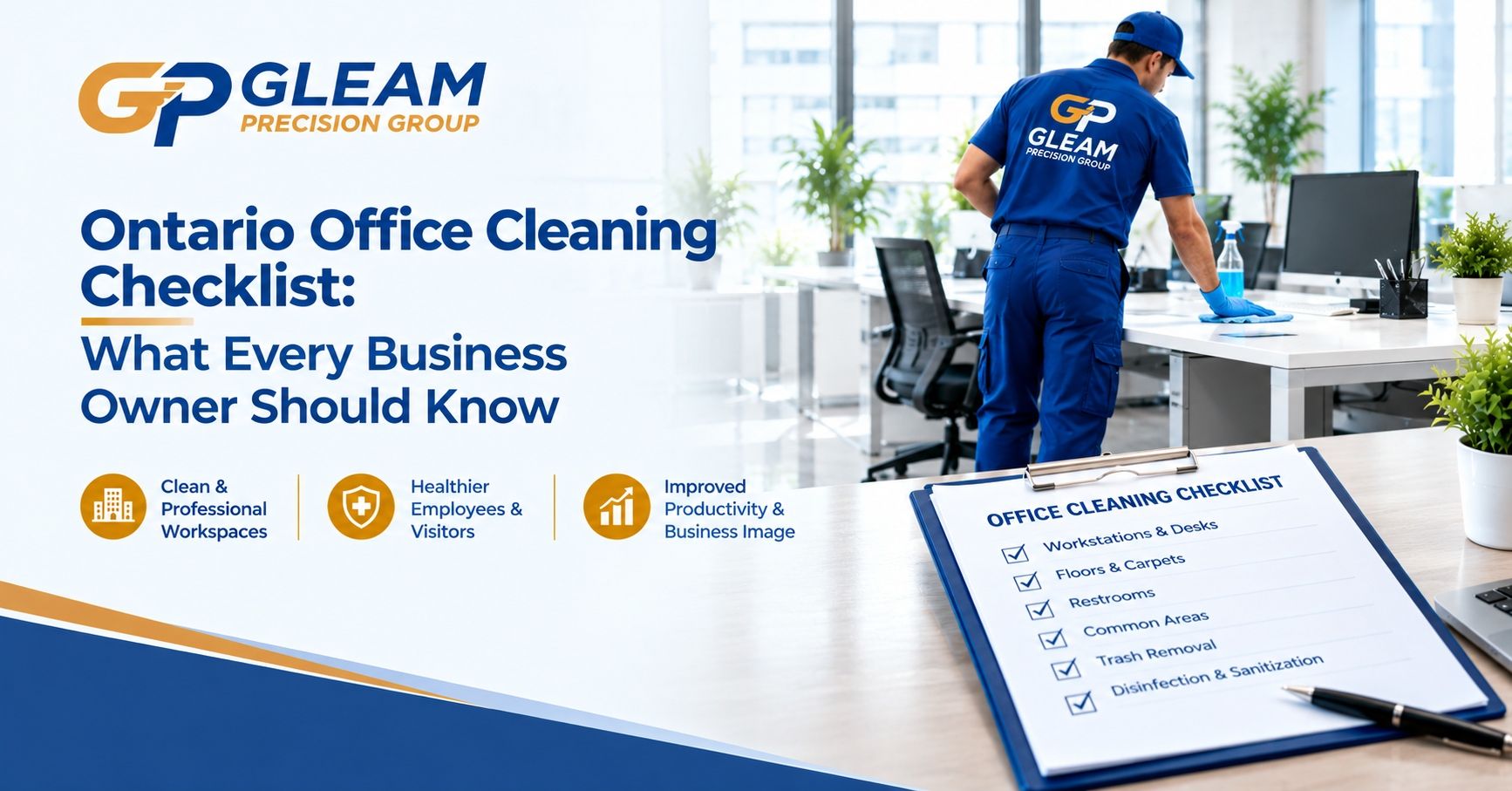
A clean office is more than a good first impression. It supports employee comfort, helps manage germs and dust, protects workplace surfaces, and creates a more professional environment for clients and visitors. For business owners across Ontario, having a consistent cleaning routine is one of the simplest ways to maintain a well-organized workplace.
An Ontario office cleaning checklist helps you identify what needs to be cleaned, how often each task should be completed, and who is responsible. Whether you manage a small office, a multi-floor workplace, a professional clinic, or a busy commercial building, a written checklist makes cleaning easier to monitor and maintain.
Businesses can also work with Gleam Precision Group to explore cleaning support suited to their workspace, schedule, and operational needs.
This guide covers daily, weekly, and monthly office cleaning tasks, seasonal considerations, health and safety practices, and the signs that it may be time to hire professional cleaners.
An effective office cleaning checklist should cover shared surfaces, workstations, washrooms, kitchens, floors, entrances, meeting rooms, and waste disposal. It should also specify task frequency, cleaning responsibilities, and any special requirements for sensitive equipment or high-traffic areas.
Most offices benefit from three levels of cleaning:
The exact schedule depends on office size, staff numbers, visitor traffic, building use, and the type of work performed.
Also Read:
Commercial Cleaning Costs in Ontario: Pricing Factors Every Business Should Know
Daily cleaning helps keep the workplace presentable and prevents routine dirt from accumulating. High-traffic offices may need certain tasks completed more than once a day.
The reception area creates the first impression for visitors, customers, and potential business partners. Keep it clean, organized, and free from visible debris.
Daily tasks include:
During Ontario winters, snow, slush, and road salt can be tracked inside. Increase entrance checks during wet weather and use suitable entrance mats to help capture moisture and debris.
Desks, keyboards, phones, and other frequently touched items can collect dust and everyday residue. Cleaning should be performed without disrupting employees or damaging equipment.
Include these tasks:
Avoid spraying cleaning solutions directly onto computers, monitors, keyboards, or electrical equipment. Apply products according to the manufacturer's instructions and use materials suitable for the surface.
Employees should generally manage personal paperwork and belongings so cleaners can reach the surfaces that require attention.
Washrooms need a consistent routine because they receive frequent use and require particular attention to hygiene.
Daily washroom tasks should include:
Cleaning staff should follow product label directions, including required contact time for disinfectants. Cleaning tools used for washrooms should not be transferred to food preparation areas or general office spaces without appropriate cleaning and disinfection procedures.
Shared kitchens can accumulate food residue, grease, crumbs, and odours throughout the workday.
Use this daily checklist:
Employees should be encouraged to wash their own dishes and store food correctly. A cleaning service can maintain common surfaces and floors, but a clear shared-responsibility policy helps keep the kitchen usable between scheduled visits.
Floors can quickly collect dust, grit, moisture, and debris, especially near entrances and shared walkways.
Daily tasks include vacuuming carpeted high-traffic areas, sweeping hard floors, spot-cleaning spills, and removing waste before bins overflow. Cleaning staff should place appropriate warning signs around wet floors and avoid leaving cords, equipment, or supplies in walkways.
For more intensive floor care, businesses can explore professional floor cleaning services.
Daily cleaning focuses on immediate needs. Weekly cleaning addresses the dirt and dust that accumulate in areas that may not require attention every day.
Once a week, clean accessible surfaces that are often missed during routine maintenance.
Use appropriate methods for delicate finishes, electronics, and specialty materials. High or difficult-to-reach areas should only be cleaned using safe access methods and suitable equipment.
Meeting rooms may be used by multiple teams and visitors throughout the week. A consistent cleaning routine helps keep these spaces ready for the next meeting.
Weekly tasks include:
High-use meeting rooms may need some of these tasks completed daily rather than weekly.
Carpet fibres can trap dust, grit, and debris brought in from outside. Chairs and fabric-covered furniture may also collect crumbs and visible stains.
Weekly maintenance should include thorough vacuuming, spot treatment of suitable stains, and inspection of high-traffic areas. Avoid excessive moisture, which can contribute to drying problems or unpleasant odours.
Depending on usage, periodic professional carpet care may be beneficial. Learn more about carpet cleaning services when routine vacuuming is no longer enough to maintain the appearance of office flooring.
Interior glass can show fingerprints, smudges, and dust, especially in reception areas and meeting rooms.
Clean accessible interior glass weekly or as needed, depending on visibility and traffic. Exterior windows may require a separate schedule based on weather, building access, height, and local conditions.
Businesses can review window cleaning services for more specialized glass maintenance.
Also Read:
Commercial Carpet Cleaning: How Often Should Businesses Clean Their Carpets?
Some tasks do not need to be performed every day or week. Scheduling them monthly, quarterly, or at another suitable interval helps prevent neglected areas from becoming difficult to maintain.
Consider the following:
Not every task belongs on a monthly schedule for every workplace. For example, a busy office with a large kitchen may need more frequent appliance and floor cleaning, while a smaller office may need less frequent intensive work.
A planned deep cleaning service can help address areas that routine maintenance does not fully cover.
Ontario's changing weather affects how businesses should manage entrances, floors, and indoor cleanliness. Seasonal planning helps prevent predictable cleaning problems.
Winter weather often brings slush, road salt, and moisture into commercial buildings. These materials can leave marks on hard floors and contribute to wear if they are not managed.
During winter:
Use cleaning products and floor-care methods suitable for the flooring material.
Spring is a useful time to review areas that received less attention during winter.
Consider detailed cleaning of accessible window sills, interior glass, carpets, entrance areas, and high-traffic floors. Review areas where grit and salt may have accumulated and address any damage or maintenance needs.
Some workplaces experience increased visitors, renovations, or changes in occupancy during summer. Dust and debris from maintenance work may require additional attention.
Inspect entryways, washrooms, shared kitchens, and meeting rooms, and adjust the cleaning schedule if occupancy or use increases.
Before the colder months arrive, check entrance mats, floor-care supplies, and cleaning procedures. Confirm who is responsible for monitoring wet floors and replenishing washroom supplies.
A seasonal review helps businesses prepare before weather-related cleaning demands increase.
A checklist is most effective when it supports safe working practices as well as appearance.
Business owners and cleaning teams should consider these essential precautions:
Follow product instructions. Cleaning products and disinfectants must be used according to their labels. Never mix chemicals unless the product instructions explicitly permit it.
Use appropriate protective equipment. Select gloves and other protective equipment according to the task, product instructions, and workplace procedures.
Prevent slips and trips. Address spills promptly, use wet-floor signs where needed, and keep cleaning equipment out of walkways.
Protect equipment and sensitive materials. Confirm which products and methods are suitable for electronics, specialty flooring, and delicate surfaces.
Keep supplies stored safely. Cleaning chemicals should be labelled and stored securely in accordance with product instructions and applicable workplace requirements.
Report maintenance concerns. Cleaners should have a clear process for reporting leaks, broken fixtures, persistent odours, damaged flooring, and other hazards.
Office cleaning supports a hygienic workplace, but it does not replace ventilation maintenance, pest management, building repairs, or other occupational health and safety measures.
A checklist only helps when staff understand it and someone verifies that the work is completed.
Start by listing the areas in your building, including reception, offices, meeting rooms, washrooms, kitchens, corridors, and storage areas. Assign each task a frequency and a responsible person or team.
Next, make the checklist easy to use. A printed sheet, digital task list, or cleaning log can record completion, missed tasks, supply shortages, and maintenance concerns. For larger workplaces, divide the building into zones so responsibilities are clear.
Review the checklist periodically. If washrooms run out of supplies before the next scheduled visit, increase inspection frequency. If a meeting room is rarely used, a different schedule may be appropriate. Adjust based on actual workplace conditions rather than relying on a fixed routine for every area.
For organizations that need recurring, structured cleaning support, commercial cleaning services can be considered as part of a broader facility-maintenance plan.
Businesses seeking routine support can also review janitorial services to determine whether scheduled cleaning, washroom upkeep, waste removal, and other recurring tasks align with their operational needs.
A business may benefit from professional cleaning when internal staff cannot consistently complete cleaning tasks, the premises have high visitor traffic, or the workplace requires more detailed floor and surface care.
Consider professional support if:
Before selecting a provider, ask what is included in the service, which areas are covered, how often each task is completed, what products and equipment are used, and how missed tasks or urgent requests are handled.
Also confirm any access arrangements, insurance requirements, after-hours procedures, and special workplace needs. Compare providers based on the clarity of their scope, reliability, relevant experience, and ability to meet your schedule—not price alone.
Also Read:
Commercial Floor Cleaning and Maintenance: A Guide for Ontario Businesses
Most offices benefit from daily attention to washrooms, kitchen surfaces, waste, spills, and high-touch areas. Floors and shared spaces should be cleaned according to traffic, while detailed dusting and deeper cleaning can follow weekly, monthly, or periodic schedules.
A daily checklist should cover reception areas, frequently touched surfaces, washrooms, kitchen counters, floors, waste bins, visible spills, and replenishment of essential washroom supplies.
It can be worthwhile if employees lack the time or equipment to maintain the workplace consistently. The decision depends on office size, usage, budget, cleaning needs, and the time staff currently spend on cleaning tasks.
Office cleaning often refers to cleaning workstations, floors, washrooms, kitchens, and shared areas. Janitorial services can include recurring cleaning and broader day-to-day facility upkeep, depending on the provider's agreed scope of work.
Use suitable entrance mats, inspect entrances more frequently, remove moisture and salt residue promptly, maintain clear walkways, and increase floor checks during snowy or wet weather.
A practical Ontario office cleaning checklist gives business owners a clear way to organize daily upkeep, schedule deeper cleaning, and identify problems before they become harder to manage. By dividing tasks into daily, weekly, and monthly routines—and adjusting for occupancy, surface types, and seasonal conditions—you can create a cleaner, more professional workplace.
Review your checklist regularly, assign clear responsibilities, and use safe cleaning procedures. When your team needs additional capacity or specialized care, compare professional cleaning options against your building's requirements and schedule. Consistent routines and clearly defined expectations are the foundation of a well-maintained office.