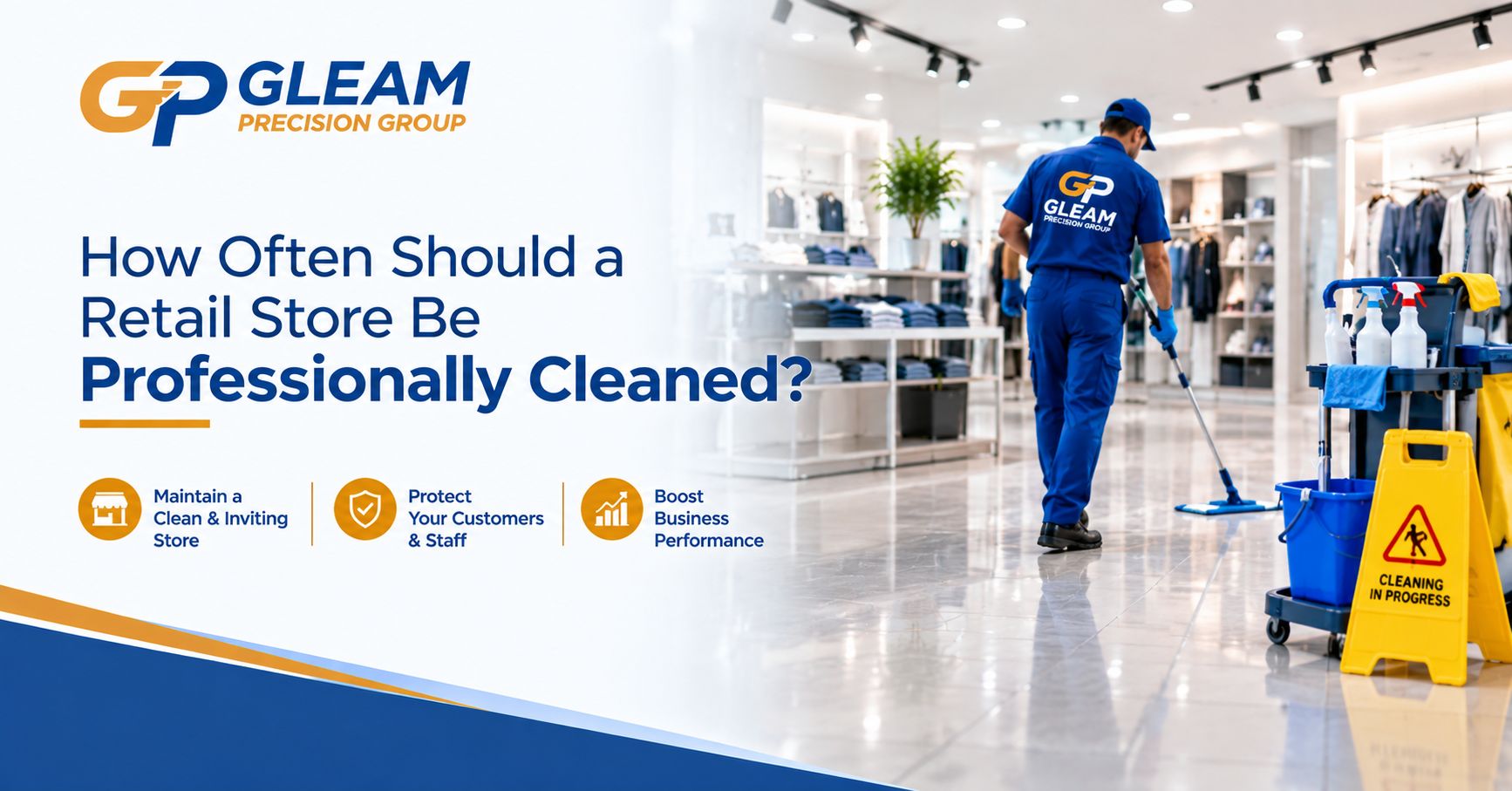
A clean retail store does more than look attractive. It helps customers feel comfortable, protects employees, supports a positive shopping experience and creates a strong first impression of your business. From entrance doors and checkout counters to fitting rooms, washrooms and stock areas, every part of a retail environment needs a consistent cleaning routine. But how often should a retail store be professionally cleaned?
In most cases, retail stores benefit from daily cleaning of high-traffic and customer-facing areas, weekly detailed cleaning, and monthly or periodic deep cleaning. However, the ideal schedule depends on store size, customer footfall, product type, operating hours, flooring, and the number of employees. A busy grocery store, fashion boutique and electronics retailer will not necessarily need the same cleaning frequency.
Businesses looking to maintain a consistently presentable environment can work with a professional provider such as Gleam Precision Group to establish a cleaning plan that reflects their premises, operating schedule and hygiene priorities.
This guide explains how frequently retail stores should be professionally cleaned, which areas need daily attention, when deep cleaning is necessary, and how to choose a practical cleaning schedule.
For most retail businesses, professional cleaning should take place daily or several times per week, with the frequency adjusted to the level of activity and the condition of the premises.
A useful starting schedule is:
These are general recommendations, not fixed rules. A store with heavy daily foot traffic may require more frequent cleaning, while a small boutique with limited visitors may be able to use a less intensive schedule. Professional cleaning frequency should be based on actual conditions rather than a one-size-fits-all timetable.
Also Read:
Day Porter Services: Is Daytime Janitorial Right for Your Building?
Before deciding how often to book professional retail cleaning services, consider the following factors.
Foot traffic is one of the most important factors. Every customer entering a store can bring dust, moisture, mud and outdoor debris onto the floors. Busy entrances, checkout queues and promotional areas can become dirty much faster than quieter sections.
Stores in shopping centres, busy commercial districts or high-traffic locations may need daily professional attention. During weekends, holidays and promotional events, additional cleaning may be necessary.
Different retail environments have different cleaning requirements.
The products sold, how customers interact with displays and the nature of the premises all influence the cleaning plan.
A large retail store with multiple departments, washrooms, storage areas and customer service counters generally requires more cleaning time than a small shop. Complex layouts can also create difficult-to-reach areas where dust and debris collect.
Professional cleaners can assess the premises and divide it into zones, assigning suitable cleaning frequencies to each area.
Stores that remain open for extended hours may accumulate dirt throughout the day. A cleaning visit after closing can help prepare the premises for the next business day. Some businesses may also need daytime cleaning for washrooms, spills, entrances and other areas that cannot wait until closing.
Rain, snow, slush, mud and pollen can increase the amount of dirt entering a retail store. During wet or snowy weather, entrance mats and floors may need attention several times a day.
Seasonal shopping periods can also increase customer traffic. Stores should review their cleaning schedules before major sales, holiday periods and local events.
Daily cleaning is essential for maintaining a neat, welcoming shopping environment. Even when a store receives a more detailed professional clean each week, visible dirt and high-touch surfaces should not be neglected between visits.
The entrance is often the first area customers notice. It should be kept free of litter, dust, mud and visible marks.
Daily tasks should include:
In bad weather, entrance areas may need to be checked and maintained throughout the day.
Retail floors receive constant use from customers, employees, carts and delivery activity. Dirt and spills can affect the appearance of the store and may create slipping hazards.
Daily floor care should include sweeping, vacuuming or dust mopping, followed by suitable damp mopping where required. Spills should be addressed promptly using products compatible with the flooring material.
Checkout counters are among the most frequently used areas in a retail store. Countertops, payment terminals, conveyor surfaces and customer-facing touchpoints should be cleaned regularly.
Use cleaning products that are suitable for the surface and follow manufacturer instructions for electronic equipment. Avoid applying liquid directly to payment terminals or other sensitive devices.
Customer and staff washrooms need frequent cleaning because they are high-use spaces. Daily tasks should include cleaning and disinfecting appropriate surfaces, sinks, toilets, taps and door handles, as well as replenishing soap, paper towels and toilet paper.
The required frequency may be higher in busy stores. Staff should also check washrooms during operating hours so that supplies remain available and visible mess is addressed promptly.
Waste bins should be emptied before they overflow, and bin lids and surrounding areas should be cleaned when needed. High-touch surfaces such as handrails, door handles, counters and shared staff equipment should be cleaned according to the store's hygiene plan.
Daily cleaning maintains the store's appearance, but some areas need more detailed attention. Weekly professional cleaning helps prevent dust, grime and residue from building up.
A weekly cleaning visit may include:
The weekly checklist should be adapted to the store's layout. For example, clothing retailers may prioritize fitting rooms and mirrors, while electronics stores may need careful dusting around display fixtures.
Also Read:
How Often Should Commercial Windows Be Cleaned in Ontario?
Some cleaning tasks do not need to be performed every day or every week. However, leaving them unattended for too long can affect the appearance and condition of the premises.
Monthly or periodic deep cleaning may include:
Flooring can collect embedded dirt, scuff marks and residue that routine mopping may not remove. Depending on the material, professional maintenance may involve machine scrubbing, carpet extraction, polishing or other suitable methods.
The correct method depends on the floor type and its manufacturer's care instructions.
Carpets, rugs, upholstered benches and seating can trap dust and soil. Their cleaning frequency depends on foot traffic, material and visible condition. Busy stores may need more frequent maintenance than low-traffic premises.
Lighting fixtures, vents, ceiling features, upper shelving and other elevated surfaces can accumulate dust. These areas should be included in a periodic cleaning plan, with appropriate equipment and safe access procedures.
Interior glass, display cases, partitions and decorative fixtures may need more intensive cleaning to remove fingerprints, streaks and accumulated residue.
Dirt can collect under display units, shelving, refrigerators and other equipment. Periodic cleaning should include accessible areas behind and beneath fixtures, following any equipment safety requirements.
A cleaning schedule should change when the store's condition or operating demands change. Consider increasing professional cleaning frequency if you notice:
A periodic inspection can help managers identify these issues before they become recurring problems.
Professional cleaning can help retail businesses maintain consistent standards without placing the entire workload on sales staff.
Customers notice the condition of floors, washrooms, fitting rooms and display areas. A clean environment helps create a more comfortable shopping experience and supports a positive impression of the business.
The appearance of a store contributes to how customers perceive its products and services. Clean displays, polished floors and tidy customer areas can help reinforce a professional image.
Regular cleaning helps remove everyday dirt and supports a cleaner environment for employees and visitors. Appropriate cleaning and disinfection practices are especially important for frequently touched surfaces and shared facilities.
A documented professional cleaning plan helps ensure that important tasks are not overlooked. It can also establish clear responsibilities, cleaning frequencies and quality checks.
Retail employees need to focus on customers, stock, sales and daily operations. Outsourcing suitable cleaning tasks can reduce the amount of time staff spend on non-core duties.
Businesses comparing providers should review the scope of work, cleaning methods, insurance, staff training, scheduling flexibility and quality-control procedures before making a decision.
A practical cleaning schedule should reflect how the store is used. Follow these steps to build one.
Step 1: Inspect the premises. Identify high-traffic areas, washrooms, staff spaces, flooring types, display zones and locations where dust or spills frequently occur.
Step 2: Divide the store into cleaning zones. For example, create separate zones for entrances, sales floors, checkout counters, fitting rooms, washrooms and back-of-house areas.
Step 3: Assign a cleaning frequency. Use daily, weekly and monthly tasks as a starting point. Increase frequency in areas with heavy use or recurring hygiene concerns.
Step 4: Choose suitable cleaning methods. Different materials require different products and techniques. Follow manufacturer guidance for flooring, furniture, glass, electronics and specialist finishes.
Step 5: Schedule cleaning around business hours. After-hours cleaning may reduce disruption, while daytime checks can address washrooms, spills and unexpected mess.
Step 6: Keep a cleaning log. Record completed tasks, inspections, issues and follow-up work. This makes it easier to identify missed tasks and adjust the schedule.
Step 7: Review the plan regularly. Reassess the schedule when customer numbers, store layout, operating hours or seasonal conditions change.
Use this simple checklist as a starting point and adapt it to your premises.
| Frequency | Cleaning priorities |
|---|---|
| Daily | Entrances, floors, checkout counters, washrooms, waste bins and high-touch surfaces |
| Several times weekly | Fitting rooms, display fixtures, shelves, mirrors and staff areas |
| Weekly | Baseboards, corners, detailed dusting, interior glass and thorough carpet vacuuming |
| Monthly or periodic | Deep floor care, upholstery, high-level dusting and hard-to-reach areas |
| Seasonal or as needed | Extra entrance maintenance, post-renovation cleaning and specialized floor or carpet treatments |
This checklist is a general guide. Food retailers, pharmacies and other specialized businesses may need additional procedures based on their operations and applicable requirements.
Also Read:
How to Maintain Hotel Cleanliness During Peak Season and High Guest Turnover
A small retail store may need professional cleaning several times per week, with daily attention to spills, washrooms, entrances and high-touch surfaces. The right frequency depends on customer traffic, store type and the condition of the premises.
Most busy retail stores benefit from daily cleaning of customer-facing areas, floors, washrooms and frequently touched surfaces. Some smaller, low-traffic stores may use a less frequent professional schedule, supported by routine daily upkeep.
Routine sweeping, vacuuming and suitable mopping should generally take place daily in customer areas. Deep floor cleaning should be scheduled according to the flooring material, foot traffic and visible soil buildup.
Many stores benefit from monthly or periodic deep cleaning, although the exact timing varies. Carpets, upholstery, high-level surfaces and floors may need different maintenance intervals depending on use and material.
Employees can handle basic tidying and immediate spill response, but professional cleaners can provide scheduled, detailed cleaning using suitable equipment and methods. Many stores use a combination of staff upkeep and professional cleaning.
Entrances, floors, checkout counters, washrooms, fitting rooms and frequently touched surfaces usually need the most attention because they receive regular customer or employee use.
How often a retail store should be professionally cleaned depends on its size, customer traffic, business type, operating hours and hygiene needs. For most stores, a combination of daily maintenance, weekly detailed cleaning and monthly or periodic deep cleaning provides a useful starting point.
The most effective schedule is one that responds to the actual condition of the premises. By prioritizing entrances, floors, checkout counters, washrooms and other high-use areas, retail businesses can maintain a cleaner, more welcoming environment for customers and employees.
A consistent cleaning plan also helps protect the store's professional image and makes it easier to manage routine maintenance. Consider working with an experienced commercial cleaning provider to assess your premises and establish a schedule that supports your store's day-to-day operations.