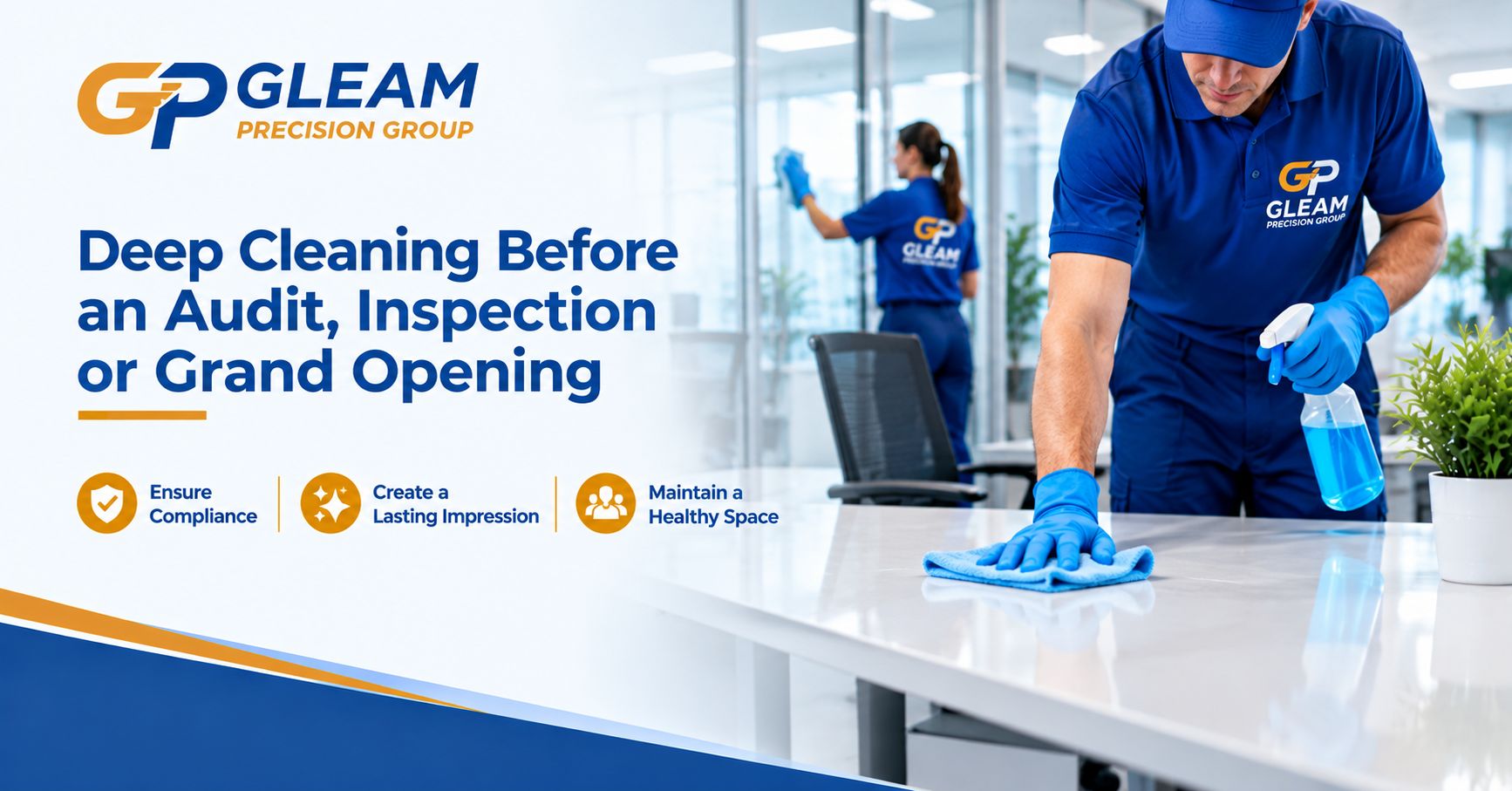
Preparing a commercial property for an audit, inspection or grand opening requires more than a quick tidy-up. Dust on vents, marks on floors, neglected washrooms and overlooked high-touch surfaces can affect how clean, organized and professionally maintained a facility appears. A detailed cleaning plan helps businesses prepare their premises, support hygiene standards and create a positive impression on visitors, inspectors, auditors, employees and customers.
For businesses in Cambridge, Ontario, working with Gleam Precision Group can help make pre-event cleaning more organized and thorough. Whether you manage an office, retail store, warehouse, medical facility or newly renovated commercial space, professional deep cleaning can address areas that routine cleaning may miss.
This guide explains when to schedule deep cleaning, which areas to prioritize, how to prepare for different types of inspections and openings, and how to choose the right commercial cleaning service.
Deep cleaning is a detailed cleaning process that goes beyond everyday maintenance. It focuses on accumulated dirt, residue, dust, stains and neglected areas throughout a property.
Routine cleaning typically includes tasks such as emptying garbage bins, wiping accessible surfaces, vacuuming and cleaning washrooms. Deep cleaning may also involve detailed floor care, cleaning accessible vents and ledges, removing buildup around fixtures, addressing neglected corners, and cleaning other areas according to the property's requirements.
The purpose of pre-event deep cleaning is to help ensure that the facility is presentable, hygienic and ready for its intended use.
The exact scope depends on the building, the type of inspection, the business's activities and any applicable regulatory requirements. Deep cleaning supports preparation, but it does not replace required repairs, maintenance, documentation or compliance checks.
Also Read:
How to Choose a Medical Facility Cleaning Company in Ontario
A clean facility can help demonstrate that a business takes workplace conditions, hygiene and property maintenance seriously. Although cleaning alone cannot guarantee a successful audit or inspection, it can help reduce avoidable housekeeping issues.
Moving movable items where appropriate, cleaning accessible edges and examining frequently neglected spaces can reveal issues that might otherwise go unnoticed. These may include stained flooring, residue around fixtures, visible dust, damaged finishes or signs of moisture.
Identifying these issues early gives property managers more time to arrange repairs or further assessment before the scheduled visit.
Shared surfaces, washrooms, break rooms and frequently used equipment can accumulate soil and germs through normal daily activity. Appropriate cleaning and disinfection procedures help maintain these areas.
Disinfection should be performed when required and according to the product label, surface compatibility and applicable hygiene protocols. Cleaning and disinfecting are not identical processes: cleaning removes dirt and debris, while disinfection uses an appropriate product to reduce specified microorganisms.
Auditors and inspectors may have specific evaluation criteria, but visible housekeeping can influence the overall impression of a facility. Clean floors, organized work areas, tidy entrances and maintained washrooms help present the premises as cared for and professionally managed.
For businesses preparing for clients, investors or senior management, a thorough cleaning plan can also support a more organized presentation.
When cleaning tasks are scheduled in advance, employees and managers can spend more time preparing records, checking equipment, organizing inventory and coordinating the event.
Professional commercial cleaning services Ontario can help businesses plan cleaning around operating hours and property requirements.
A grand opening is an opportunity to introduce a business, welcome customers and establish a strong first impression. Customers may notice fingerprints on glass doors, dust on display shelves, marks on floors or unpleasant odours before they notice the details of a product or service.
Pre-opening cleaning helps prepare the space for visitors and staff.
Key benefits include:
For newly renovated or expanded premises, post-construction cleaning in Ontario may be relevant when dust and construction-related debris need to be addressed before the final presentation.
A structured checklist helps ensure that important areas are not overlooked. The following checklist can be adapted to offices, retail properties and other commercial facilities.
The entrance is often the first area visitors see. Clean glass doors, remove fingerprints from accessible surfaces, vacuum or clean entry mats, and address visible marks on floors.
Pay attention to reception counters, waiting areas, accessible ledges, door handles and corners where dust collects. Ensure walkways are clear and that wet-floor hazards are managed appropriately.
Flooring can collect dust, soil, spills and marks that regular maintenance may not completely remove.
Depending on the flooring type and its condition, preparation may include detailed vacuuming, spot treatment, mopping, scrubbing or other suitable floor-care methods.
Businesses may benefit from professional floor cleaning services for hard surfaces or carpet cleaning services in Ontario for carpeted areas.
The appropriate method depends on the material, manufacturer's recommendations, soil level and drying time. Schedule any moisture-intensive cleaning early enough to allow floors and carpets to dry before people return.
Washrooms require particular attention because they are frequently used and can affect both hygiene and visitor confidence.
Include the following tasks in the plan:
For facilities with specific sanitation requirements, use the relevant cleaning procedures and documentation rather than relying on appearance alone.
Offices and meeting rooms should be clean, organized and ready for use. Dust accessible desks, shelves, window ledges and other suitable surfaces. Clean shared tables, chair arms, door handles, switches and other frequently touched points.
Avoid spraying liquids directly onto computers, monitors, keyboards or other sensitive electronics. Follow manufacturer guidance and the business's equipment-cleaning procedures.
Also Read:
Daytime vs. After-Hours School Cleaning: Which Works Better?
Break rooms and food-preparation spaces should be cleaned according to their intended use and applicable hygiene requirements.
Clean suitable counters, sinks, cupboard exteriors, appliance handles, tables and floors. Remove rubbish and address spills promptly. Pay attention to grease buildup where relevant and use cleaning products compatible with food-contact surfaces.
Where food is prepared or served, follow the applicable sanitation procedures, including any requirements for rinsing or sanitizing food-contact surfaces. A general commercial cleaning checklist may not be sufficient for a regulated food-service environment.
Smudged windows and fingerprints on glass can be particularly noticeable under bright lighting. Clean accessible interior glass, entrance doors, glass partitions and suitable window surfaces.
For properties where exterior appearance matters, window cleaning services in Ontario may help address exterior glass and other appropriate areas.
High windows or difficult-to-access glazing should be handled with suitable equipment and trained personnel rather than improvised methods.
Include frequently touched surfaces in the cleaning plan, such as door handles, handrails, switches, shared counters and appropriate equipment touchpoints.
Also review accessible baseboards, corners, vents, ledges and the spaces around fixtures. These areas can accumulate visible dust over time.
The scope should be adapted to the property. Some surfaces may require specialized products, while sensitive equipment or restricted areas may need to be handled by authorized personnel.
Customer-facing areas are important, but operational spaces should not be forgotten. Depending on the inspection, storage rooms, staff corridors, utility areas and waste-handling locations may also be relevant.
Remove unnecessary rubbish, clean appropriate surfaces, keep walkways unobstructed and ensure materials are stored safely. Do not move chemicals, equipment or stored items unless authorized to do so.
For regulated facilities, consult the relevant inspection criteria before deciding which areas and records require attention.
Not every audit, inspection or opening has the same priorities. Tailor the cleaning plan to the reason for the visit.
Prioritize housekeeping, unobstructed walkways, clean shared facilities and the appropriate condition of floors and work areas. Check whether the inspection includes specific operational zones or cleaning records.
Cleaning does not correct unsafe equipment, blocked emergency exits or missing compliance documentation. These issues should be addressed separately.
Focus on the areas included in the audit scope. Maintain consistent cleaning procedures, make relevant records available if required, and ensure that cleaning supplies and chemicals are stored appropriately.
If the audit concerns a regulated process, follow the applicable documented procedures rather than assuming that a visually clean space meets every requirement.
Prioritize entrances, display areas, windows, customer seating, counters, washrooms and employee facilities. Arrange final cleaning close enough to the opening to preserve the presentation, but allow sufficient time for floors and carpets to dry.
Address construction dust, residue and any remaining debris using methods appropriate for the surfaces and materials. Coordinate cleaning with contractors so that cleaning is not immediately undone by unfinished work.
The ideal timing depends on the size of the facility, the scope of work, how much traffic the premises receive and whether repairs or construction are still underway.
A practical schedule is:
Several days to two weeks beforehand: Confirm the inspection or opening date, identify priority areas, review special requirements and book the cleaning team. Larger or more complex properties may need additional lead time.
One to several days beforehand: Complete intensive tasks such as detailed floor care, carpet cleaning, cleaning accessible glass and addressing neglected areas. Allow appropriate drying and ventilation time.
The day before: Perform final touch-ups, empty bins, check washrooms, clean visible surfaces and confirm that the property is ready.
On the day: Conduct a short walkthrough, remove newly accumulated rubbish, check entryways and washrooms, and address fingerprints or minor marks.
These are planning guidelines, not fixed rules. A small office may need much less preparation, while a large commercial facility or regulated site may require a more detailed schedule.
Choosing a cleaning provider involves more than comparing prices. The company should understand the property's needs, the deadline and the cleaning standards relevant to the work.
Consider these factors:
Businesses looking for ongoing maintenance alongside intensive cleaning can also explore janitorial cleaning services in Ontario. A planned maintenance schedule can help keep the property presentable after the audit or opening has passed.
The cost of commercial deep cleaning varies according to the size of the property, its condition, the type of surfaces, the required services and the available preparation time.
A property needing basic detailed cleaning may require less work than a facility with heavy floor buildup, extensive glass, post-construction dust or specialized sanitation requirements.
To obtain a useful quote, provide the cleaning company with:
Ask whether the quote includes equipment, cleaning products, floor treatments, interior or exterior windows, carpet extraction and post-cleaning inspection. Clarifying these details helps reduce misunderstandings and makes proposals easier to compare.
Also Read:
Warehouse Cleaning Checklist: Floors, Washrooms, Breakrooms and High-Traffic Areas
Deep cleaning helps remove accumulated dirt, address neglected areas and improve housekeeping. It can support preparation for an inspection, but it does not guarantee compliance or replace required maintenance and documentation.
For many projects, booking several days to two weeks in advance is a sensible starting point. Larger facilities, post-construction projects and properties with specialized requirements may need more time.
Start with the areas that require intensive work, such as floors, carpets, glass and neglected surfaces. Finish with high-visibility touch-ups, entrances, customer areas and washrooms closer to opening day.
Routine janitorial cleaning may be sufficient for some well-maintained facilities, but others need more detailed work. The decision should depend on the property's condition, the inspection scope and any applicable hygiene requirements.
Professional cleaning can help address accessible construction dust and suitable residues. The correct method depends on the materials and the type of debris. Specialized hazards or regulated contaminants may require qualified remediation professionals.
No. Deep cleaning can support good housekeeping, but inspection results depend on the applicable standards and the property's overall condition, operations, maintenance and documentation.
Deep cleaning before an audit, inspection or grand opening is an important part of preparing a commercial property. By addressing floors, washrooms, glass, workstations, high-touch surfaces and overlooked spaces, businesses can create a cleaner environment and reduce avoidable housekeeping concerns.
The best results come from planning early, identifying the specific requirements of the visit, choosing suitable cleaning methods and allowing enough time for detailed work and final checks. A tailored checklist also helps teams distinguish cleaning tasks from repairs, safety corrections and regulatory obligations.
For businesses in Cambridge, Ontario, exploring suitable commercial cleaning, office cleaning, janitorial or specialized floor-care services can help build a practical preparation plan. With the right scope and schedule, your premises can be cleaner, more organized and ready to welcome inspectors, auditors, employees and customers.