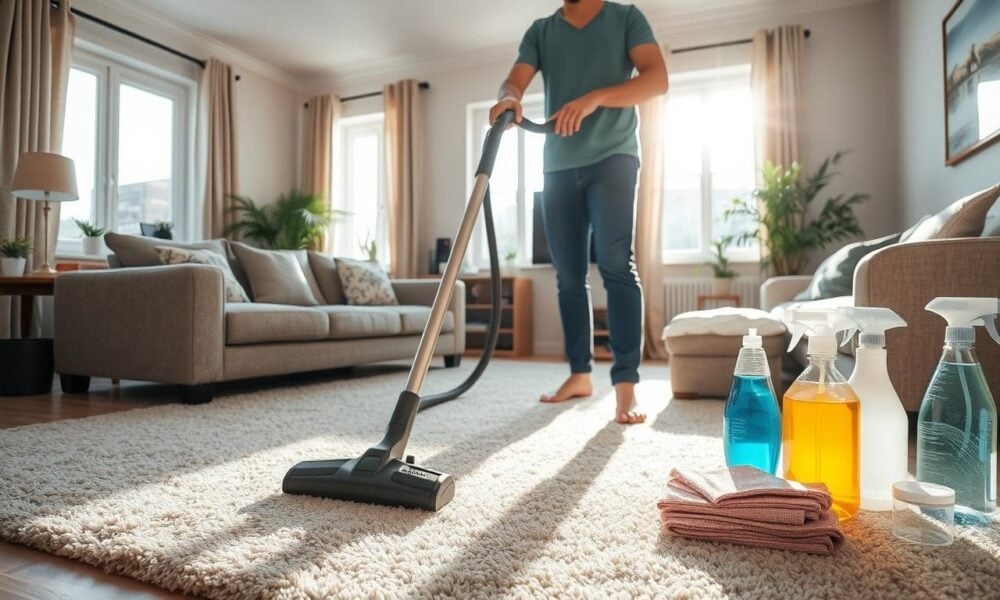
Keeping a home clean does not have to mean spending your entire weekend scrubbing, dusting, and organizing. With the right approach, efficient home cleaning can become a simple and manageable routine that saves time while keeping your living space fresh, comfortable, and hygienic.
The key is not necessarily cleaning more often. It is cleaning smarter.
A well-planned cleaning routine helps you focus on the areas that matter most, avoid unnecessary repetition, and maintain your home before dirt, dust, and clutter become difficult to manage. Whether you prefer to clean your home yourself or occasionally bring in professional cleaning support, having an organized system can make a noticeable difference.
In this comprehensive guide, we will explore practical strategies for efficient home cleaning, room-by-room priorities, useful cleaning habits, and ways to make your routine easier and more consistent.
Efficient home cleaning means getting better results with less wasted time, effort, and repetition.
Instead of randomly moving from one cleaning task to another, an efficient approach involves planning your work, cleaning in the correct order, and concentrating on high-priority areas.
For example, rather than cleaning a room completely and then moving to another room, you can dust multiple rooms first, vacuum afterward, and finish with floors and high-touch surfaces. This approach reduces unnecessary movement and helps you complete similar tasks together.
An efficient cleaning routine generally focuses on:
The objective is simple: a cleaner home without unnecessary effort.
One of the biggest challenges of household cleaning is allowing small tasks to accumulate.
A few dishes left overnight, dust that is not removed regularly, or a bathroom that is cleaned only occasionally can eventually turn into a much larger cleaning project.
A consistent routine prevents this buildup.
Regular cleaning can also make your home feel more organized. When surfaces are free from unnecessary clutter and frequently used areas are maintained, everyday cleaning becomes faster.
Instead of waiting until your entire home needs attention, divide your cleaning responsibilities into manageable tasks.
For example, you might use:
This approach makes cleaning more predictable and less overwhelming.
Before reaching for cleaning products, take a few minutes to remove unnecessary items.
Cleaning around clutter makes the process slower because you have to move objects before you can wipe or vacuum a surface. Decluttering first creates a clear workspace and allows you to clean more effectively.
Start with visible areas such as:
Put items back where they belong, dispose of rubbish, and separate things that need to be stored or organized.
Once surfaces are clear, dusting and wiping become much easier.
One of the simplest ways to improve your cleaning efficiency is to work from top to bottom.
Dust and debris naturally fall downward. If you clean your floors first and then dust shelves, tables, or ceiling areas, you may have to clean the floor again.
A better sequence is:
This method helps prevent repeated work and allows you to move through a room more efficiently.
Another useful principle is to complete dry cleaning before wet cleaning.
Dusting, sweeping, and vacuuming should generally happen before mopping or wiping with liquid cleaning solutions.
For example, remove loose dust and debris from a floor before mopping it. Otherwise, dirt can become damp and more difficult to remove.
The same principle applies to other surfaces. Remove loose dust and particles first, then use an appropriate cleaning solution for the final cleaning step.
Not every surface in your home needs the same level of attention every day.
High-touch areas deserve more regular cleaning because they are handled frequently throughout the day.
Examples include:
Including these areas in your routine can help maintain a cleaner environment without requiring you to deep clean the entire house every day.
The kitchen is one of the busiest areas of a home and can quickly collect food residue, grease, crumbs, and other debris.
For efficient kitchen cleaning, start by clearing countertops and washing or loading dishes. Then wipe commonly used surfaces before moving to appliances and floors.
Pay particular attention to:
Do not forget areas that are easy to overlook, such as the space around appliances and cabinet edges.
A few minutes of maintenance after cooking can prevent grease and food residue from becoming difficult to remove later.
Bathrooms benefit from consistent cleaning because moisture and frequent use can quickly create buildup.
A practical bathroom cleaning routine should include:
Ventilation is also important. Keeping the bathroom properly ventilated can help reduce excessive moisture and keep the space fresher.
For deeper cleaning, give additional attention to grout, corners, fixtures, shower doors, and other areas that may not require attention during quick daily maintenance.
Bedrooms and living rooms may not appear as demanding as kitchens or bathrooms, but dust and clutter can accumulate quickly.
For bedrooms, focus on:
In living areas, pay attention to furniture, shelves, tables, electronics, floors, and high-touch surfaces.
Vacuuming upholstered furniture periodically can also help remove accumulated dust and debris.
Having the right tools can significantly improve cleaning efficiency.
Instead of collecting a large number of products, keep a practical set of reliable cleaning supplies available for common tasks.
Useful items may include:
Use products according to their labels and make sure they are suitable for the surface being cleaned.
It is also important never to mix cleaning chemicals unless the product instructions specifically indicate that they can be combined. Some combinations can produce dangerous fumes.
You do not always need hours to maintain a clean home.
A short daily routine can prevent clutter and dirt from building up.
For example, spend a few minutes on:
The purpose of a short daily routine is maintenance, not deep cleaning.
When small tasks are handled regularly, your weekly cleaning session becomes much easier.
A weekly cleaning session can cover the areas that require more attention.
Your checklist might include:
You can divide these tasks across different days depending on your schedule.
The best cleaning schedule is the one you can actually maintain consistently.
Even with regular maintenance, certain areas eventually need deeper attention.
Deep cleaning can include tasks such as:
How often you need these services depends on your household, lifestyle, traffic, pets, and individual cleaning requirements.
For larger or more demanding cleaning projects, professional cleaning support can also save significant time and effort.
DIY cleaning works well for routine maintenance, but there are situations where professional help can be a practical choice.
Professional cleaning may be useful when:
A professional cleaning team can bring experience, specialized equipment, and a structured process to larger cleaning requirements.
For businesses and commercial properties, professional cleaning is especially valuable because cleanliness needs to be maintained consistently rather than occasionally.
The biggest secret behind efficient home cleaning is not a complicated technique or an expensive collection of products.
It is consistency.
A home that receives small amounts of attention regularly is generally easier to maintain than a home that is left untouched until cleaning becomes a major project.
Start with a simple system:
Declutter → Dust → Wipe → Vacuum/Sweep → Mop → Disinfect high-touch areas where appropriate → Reset the room.
Once this sequence becomes a habit, cleaning can feel much less demanding.
Efficient home cleaning is about creating a system that works for your lifestyle. By decluttering first, cleaning from top to bottom, working from dry to wet, prioritizing high-touch areas, and maintaining a regular schedule, you can keep your home cleaner without spending unnecessary hours on repetitive tasks.
Daily maintenance, weekly cleaning, and periodic deep cleaning each have an important role. When combined, they create a practical approach to maintaining a fresh, comfortable, and well-kept environment.
And when a cleaning project becomes too large, time-consuming, or specialized to handle on your own, professional cleaning support can make the process considerably easier.
A clean space does not happen by accident. With the right routine and the right support when needed, efficient home cleaning can become a simple, sustainable part of everyday life.
Basic cleaning should be performed regularly, while deeper cleaning can be scheduled weekly, monthly, or seasonally depending on your home's needs, household size, and lifestyle.
Start by decluttering, then work from top to bottom and from dry cleaning tasks to wet cleaning. Group similar tasks together to reduce unnecessary movement.
For most cleaning routines, dust first and vacuum afterward. Dust and debris can fall onto the floor while you clean higher surfaces, allowing the vacuum to remove them afterward.
Break cleaning into smaller daily and weekly tasks instead of waiting for everything to accumulate. A simple checklist can also make the process easier to manage.
Professional cleaning can be helpful for deep cleaning, move-in or move-out cleaning, post-renovation cleaning, specialized floor or carpet care, or when your schedule does not allow enough time for thorough cleaning.